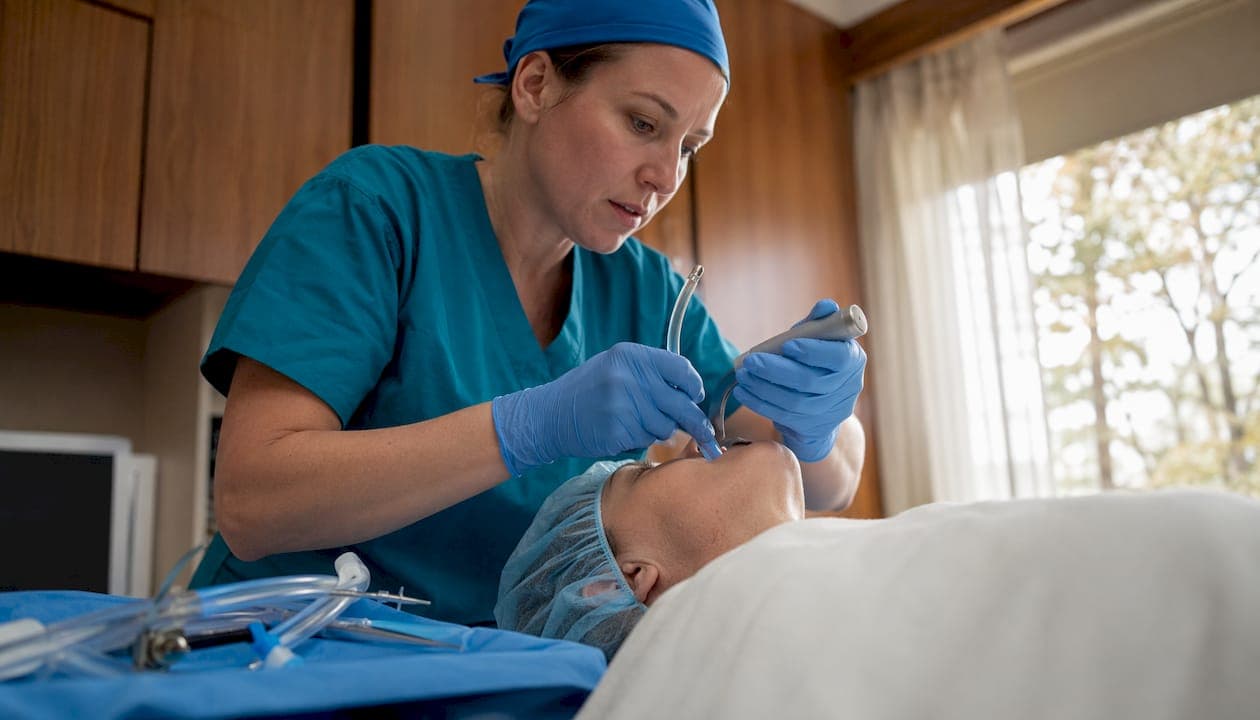
Yes, CRNAs perform intubation in all 50 states
CRNAs are fully authorized and trained to perform endotracheal intubation across every state, territory, and Washington D.C. This is not a gray area or a state-by-state question. Intubation is a core competency, not an optional add-on to their practice.
What surprises many people is how routine it is. CRNAs perform intubations independently, and research shows their complication rates are very low and comparable to those of physician anesthesiologists. The difference is negligible. Many hospitals specifically request CRNAs for difficult airway cases because of their recognized expertise.
The National Board of Certification and Recertification for Nurse Anesthetists (NBCRNA) certifies every practicing CRNA, setting a national standard that includes airway management competency. Certification is not a formality. It requires passing a rigorous national exam and maintaining continuing education throughout a career.
State practice authority varies, but none of it restricts intubation itself:
- Full Practice Authority states (29 states plus D.C.): CRNAs practice and manage airways completely independently, no physician oversight required
- Collaborative practice states: CRNAs work alongside physicians but retain full intubation authority
- Supervision-required states: A physician must be involved in the broader anesthesia relationship, but intubation remains within the CRNA's scope
- Federal facilities (VA, military): CRNAs serve as primary anesthesia providers, including all airway management
The supervision question affects organizational structure, not whether a CRNA can place an endotracheal tube.
How CRNA training builds real airway expertise
The path to becoming a CRNA is not short. Students complete a bachelor's degree in nursing, spend at least one year in critical care, then enter a master's or doctoral program in nurse anesthesia. Total training runs multiple years over undergraduate and advanced nursing education.
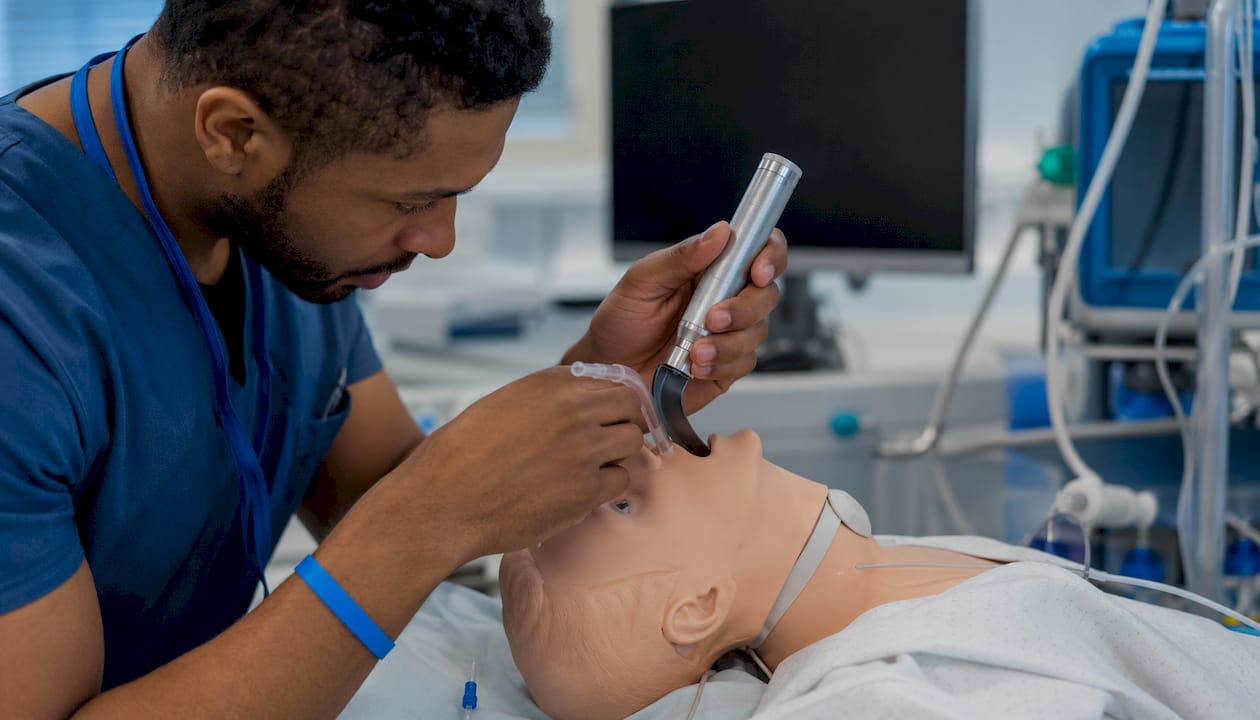
The clinical component is where airway skills are built. CRNAs complete extensive clinical hours during their graduate programs, with a substantial portion dedicated to supervised intubations, airway simulations, and hands-on management of real patients. That volume of practice is what turns a textbook procedure into muscle memory.
Beyond standard endotracheal intubation, programs teach video laryngoscopy, fiberoptic intubation, and laryngeal mask airway (LMA) placement. These advanced techniques matter most when a patient's anatomy makes standard intubation difficult or impossible. A CRNA who has trained on all three approaches is prepared for the full range of airways they will encounter in practice.
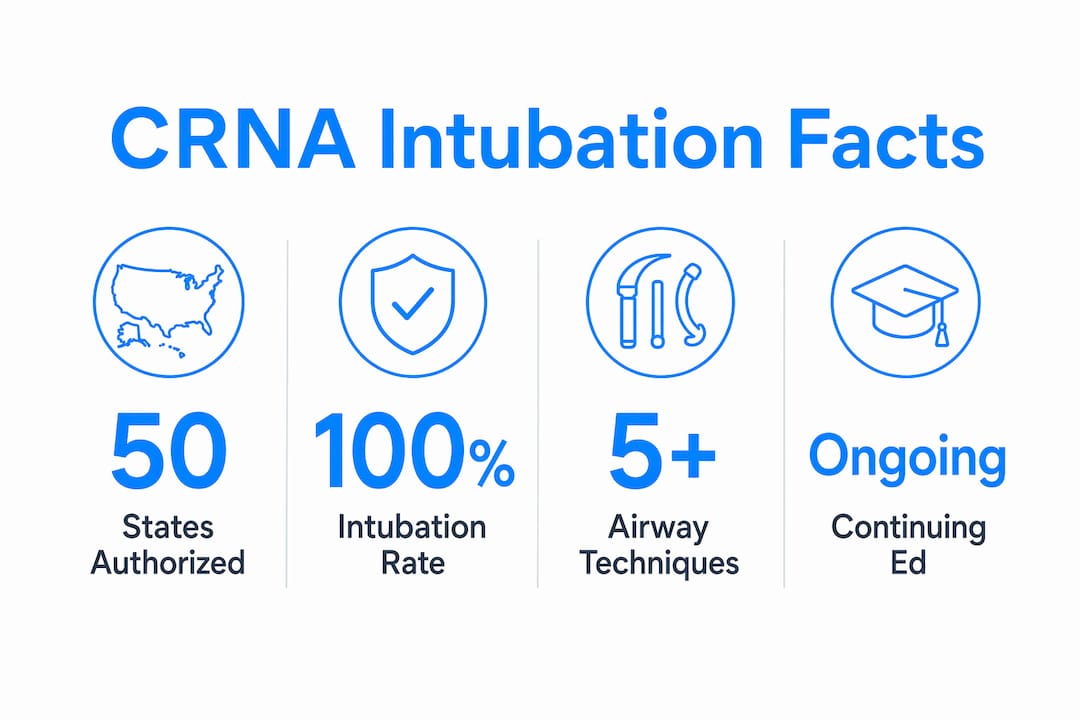
After graduation, the NBCRNA requires ongoing continuing education to maintain certification. Airway management stays current, not frozen at graduation.
Pro Tip: If you are studying for the CRNA certification exam, Recallos builds daily practice questions directly from the NBCRNA exam blueprint, so you are reviewing what actually shows up on test day.
What CRNAs actually do in the operating room
Before a patient goes under, the CRNA reviews their medical history, assesses the airway anatomy, selects the appropriate equipment, and develops the anesthesia plan. That pre-procedure assessment directly shapes how intubation will be approached.
Once the procedure begins, the CRNA's airway responsibilities include:
- Performing rapid sequence intubation (RSI) for patients at aspiration risk
- Placing endotracheal tubes, LMAs, or other adjunct airway devices based on the clinical situation
- Continuously monitoring oxygen saturation, end-tidal CO2, and airway pressures throughout the case
- Adjusting ventilator settings in response to patient physiology
- Managing unexpected airway complications, including failed intubation protocols
- Extubating the patient safely at the end of the procedure
In many settings, the CRNA makes all of these decisions independently. In anesthesia care team models, they coordinate with a physician anesthesiologist, but the hands-on airway management is still the CRNA's responsibility. The clinical autonomy in airway decisions is real, even in supervised environments.
CRNAs are the sole anesthesia providers in nearly all rural hospitals, where they handle obstetrical, surgical, and trauma cases without a physician anesthesiologist on site.
How state laws and federal rules shape CRNA intubation practice
All 50 states permit CRNA intubation. The regulatory variation is about supervision of the broader anesthesia practice, not about the intubation procedure itself.
Many states grant CRNAs Full Practice Authority, meaning they can deliver complete anesthesia care without any physician oversight, with notable states including California, Oregon, Colorado, and Minnesota among them. Roughly 20 states still require some form of physician involvement, ranging from direct supervision to a written collaborative agreement.
The federal layer adds complexity. Since 2001, the Centers for Medicare and Medicaid Services (CMS) has allowed state governors to opt out of the federal physician supervision requirement for Medicare-participating facilities. A state can have full practice authority under its own laws but still face federal supervision requirements if the governor has not submitted an opt-out letter.
Hospital and facility bylaws can impose additional restrictions beyond what state law requires. A hospital in Colorado, a full-practice-authority state, can still require physician oversight for all anesthesia cases through its credentialing policies. State law sets the floor; facility policy can raise it.
In states with Full Practice Authority, CRNAs can own and operate independent anesthesia practices as a professional corporation or LLC, performing intubations and all anesthesia care autonomously within their licensed scope.
The practical rule: check your state's nurse practice act, your state's CMS opt-out status, and your facility's credentialing requirements. All three layers must align before independent practice is fully operational.
How CRNAs and anesthesiologists differ in airway management
The most direct answer: both are trained and qualified to perform intubation and manage airways safely. The difference is in how they got there.
CRNAs are advanced practice nurses who hold a Doctor of Nursing Practice (DNP) degree and complete extensive clinical hours. Anesthesiologists are physicians who complete four years of medical school, four years of anesthesiology residency, and often a fellowship. The American Medical Association notes that anesthesiologists accumulate approximately 12,000–16,000 patient-care hours during training. That difference in volume reflects the broader medical training scope, not a gap in intubation competence specifically.
For airway management, the practical distinction often comes down to case complexity and institutional setting. Anesthesiologists tend to concentrate in large academic medical centers and take on the most medically complex cases. CRNAs handle the full range of routine surgical cases and are the primary providers in rural hospitals and outpatient centers. Both providers collaborate on difficult airways, and neither role makes the other redundant.
The question of whether anesthesiologists will be replaced by CRNAs misframes the situation. Workforce data shows demand growing for both. The more useful framing is that each role fills a different part of the access gap, particularly as rural and underserved communities rely heavily on CRNA-only models.
For students weighing the two paths, the CRNA vs. anesthesiologist comparison comes down to training length, practice independence by state, and the types of cases you want to manage. Neither path is a shortcut.
Preparing for the CRNA certification exam

Airway management questions appear throughout the NBCRNA certification exam, and the clinical reasoning behind intubation decisions is exactly the kind of content that separates prepared candidates from those who studied the wrong material.
Recallos is built by practicing nurses and CRNAs specifically for this exam. The platform generates adaptive daily practice questions from the actual NBCRNA blueprint, identifies your weak areas, and adjusts what you review based on what you have already mastered. You are not grinding through random trivia. You are practicing the decisions you will face on exam day and in the OR.
Start building that confidence at recallos.co.
Key Takeaways
CRNAs are legally authorized to perform endotracheal intubation in all 50 states, with complication rates comparable to physician anesthesiologists at 0.23% versus 0.27%.
| Point | Details |
|---|---|
| Intubation is universal for CRNAs | All 50 states authorize CRNA intubation as a core scope-of-practice skill, not a restricted procedure. |
| Training depth is substantial | CRNAs complete 2,000–2,500 clinical hours including supervised intubations, video laryngoscopy, and fiberoptic techniques. |
| 29 states grant full independence | 29 states plus D.C. allow CRNAs to manage airways and deliver anesthesia without physician oversight. |
| Facility rules add a layer | Hospital bylaws can restrict practice beyond state law, requiring CRNAs to verify credentialing policies at each facility. |
| Outcomes match anesthesiologists | CRNA intubation complication rates (0.23%) are comparable to anesthesiologist rates (0.27%), reflecting equivalent clinical safety. |