
The single most effective way to raise your Next Generation NCLEX pass odds is daily NGN-style active practice tied to Clinical Judgment Measurement Model (CJMM) drills, paired with timed, full-length endurance sessions. Passive review and old-style NCLEX cramming won't cut it. Schedule your exam through Pearson VUE roughly 45 days after graduation, work official NCSBN sample items, and remediate weak areas fast instead of re-reading the same content twice.
TL;DR:
- Focus your practice on daily NGN-style questions linked to clinical judgment steps rather than passive review or cramming.
- Incorporate unfolding case studies, cause-and-effect reasoning, and trend analysis into your daily drills to build decision-making skills.
- Use full-length timed simulations weekly to develop stamina and simulate the exam duration, especially for the five-hour test window.
- Remediate weak CJMM areas with targeted short quizzes over four to six weeks instead of re-reading content or answering questions passively.
- Limit study resources to two or three trusted sources to avoid fragmentation and better identify your actual gaps.
Table of Contents
- What Are the Best Next Gen NCLEX Strategies for a Study Plan?
- How Do You Practice Each NGN Item Type?
- How Do You Train the Clinical Judgment Measurement Model?
- How Do You Build Endurance for a Five-Hour Exam?
- What Should You Do When Your Practice Scores Stall?
- A Practitioner's Take on Why Daily Practice Beats Cramming
- How RecallOS Fits Your NGN Study Routine
- Sources
- FAQ
What Are the Best Next Gen NCLEX Strategies for a Study Plan?
Your prep window depends on how much NGN-format exposure you already have. Students coming straight out of an NGN-integrated nursing program can often move fast; those returning to studying after a gap should build in more runway.
- Weeks 1 to 2 (foundation): Diagnostic test, then 30 to 40 questions daily focused on content gaps, not random review.
- Weeks 3 to 6 (build): 50 to 75 questions daily, including 2 to 3 unfolding case studies weekly. One full-length timed practice test every 2 to 3 weeks, which matches the pacing many successful candidates follow during their 4 to 8 weeks of structured prep.
- Final 1 to 2 weeks (taper and endurance): Fewer new questions, more full-length simulations, heavier CJMM review on missed items.
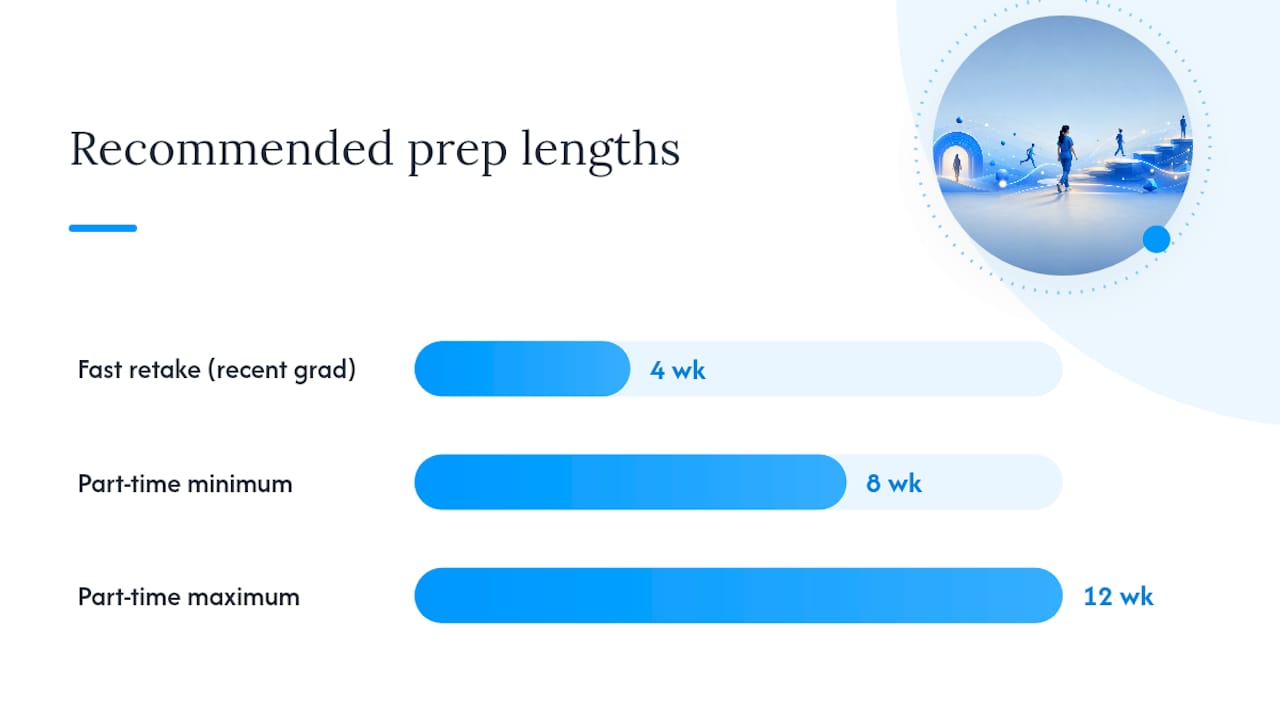
A 4 week plan suits someone retaking soon after an NGN-focused nursing curriculum. Someone studying part time around work should stretch toward 8 to 12 weeks, matching the 2 to 3 month review window that keeps pace realistic without losing momentum. Check your detailed practice-plan structure for a day-by-day breakdown you can adapt.
Your performance dashboard should drive weekly adjustments. If pharmacology keeps dragging your average down, that block gets more daily minutes next week, not less.
Pro Tip: Cap your study resources at two or three trusted sources. Jumping between five different question banks fragments your review and makes it harder to spot your actual weak patterns.
How Do You Practice Each NGN Item Type?
The NGN, which launched in April 2023, uses item types built specifically to measure clinical judgment rather than simple recall. Each format tests a different piece of the decision chain, so drilling them generically won't build the right muscle.
- Unfolding case studies present a patient scenario across multiple linked questions. Practice 2 to 4 a week and resist skipping ahead. Read every update to the case before answering.
- Bow-tie items ask you to connect a cause, an action, and a result in one structure. Write out your reasoning chain before selecting answers.
- Highlight items require you to select relevant text within a passage. Practice scanning for clinically significant findings, not just anything that sounds important.
- Trend items show data changing over time (vitals, labs). Track the direction of change, not just the current number.
- Extended drag-and-drop items test sequencing. Practice narrating why each step comes before the next.
- Hot-spot items ask you to click specific data points. Slow down here. These get rushed more than any other format.
After every practice item, write one sentence explaining why the correct answer was correct and why your wrong answer felt tempting. That habit catches the traps faster than re-reading rationales passively.
How Do You Train the Clinical Judgment Measurement Model?
The CJMM breaks clinical judgment into six measurable steps, and each one responds to a different kind of drill.
- Recognize cues: Practice pulling out abnormal findings from a case before reading further. Time yourself.
- Analyze cues: Group findings into patterns. Ask "what do these three things suggest together?"
- Prioritize hypotheses: Rank two or three possible problems by urgency, not by which one you thought of first.
- Generate solutions: List more than one valid intervention, then defend your top pick out loud.
- Take action: Practice choosing the next single best step, not the entire care plan at once.
- Evaluate outcomes: Predict what a successful outcome looks like before you see the result.
Tag every practice question with the CJMM step it tests, then track accuracy by step, not just by content area. Peer-reviewed prep research backs this approach, finding that structured decision-tree and analytical practice improves organized clinical thinking and retention compared to passive review.
Pro Tip: Grab a study partner and take turns doing a 60-second think-aloud on a case study. Hearing your own reasoning out loud exposes gaps that silent review never will.

How Do You Build Endurance for a Five-Hour Exam?
You can schedule the NCLEX through Pearson VUE as early as 45 days after graduation, and the exam itself can run up to five hours depending on how many questions the computer needs to reach a decision. Building physical and mental stamina for that stretch matters as much as content knowledge.
The number that changes your prep: A five-hour maximum testing window means your last full-length practice test should also run untimed-length, distraction-free, and without a phone nearby. Twenty minutes of stamina practice does not prepare you for hour four.
- Weeks 3 to 6: two full-length timed simulations under real testing conditions.
- Final two weeks: one more full-length run, then taper to shorter reviews.
- Day before: light review only, confirm your Pearson VUE appointment time and required ID.
- Morning of: eat something substantial, arrive early, expect a palm vein scan and strict check-in rules at the test center.
Review a full exam-day checklist so nothing about the logistics surprises you on test day.
What Should You Do When Your Practice Scores Stall?
Stalled scores almost always trace back to one of three habits: rereading notes instead of answering new questions, skimming rationales instead of writing them out, or skipping CJMM-tagged review entirely. Fix the habit before you add more hours.
- Pull your last two weeks of performance data and identify the two lowest-scoring CJMM steps or content areas.
- Build a focused 4 to 6 week remediation block targeting only those areas, with daily short quizzes instead of long marathon sessions.
- Rewrite the rationale for every missed question in your own words within 24 hours. Waiting longer loses the context.
- If a single content area (like pharmacology or prioritization) stays weak after two remediation cycles, consider a structured, instructor-led review rather than another round of solo study.
Consistent, 4 to 8 weeks of daily NGN-format practice tends to outperform sporadic cramming, but only when the daily practice actually targets your weak spots rather than repeating what you already know.
A Practitioner's Take on Why Daily Practice Beats Cramming
Clinical decision-making at the bedside doesn't reward memorized facts. It rewards pattern recognition built through repetition, which is exactly what the CJMM measures and exactly what daily NGN-style practice trains. The nurses and CRNAs behind RecallOS's high-yield question sets built the platform around that overlap on purpose.
Students who treat NGN prep like a habit, not a cram session, walk into the testing center having already rehearsed the exact reasoning loop the exam measures. That's the whole game.
— Caleb
How RecallOS Fits Your NGN Study Routine
RecallOS is built for exactly the daily habit this article describes: short, focused practice sessions instead of marathon cram nights. The Daily Recall Run delivers a fresh set of NGN-style questions every day, tagged so you can see which CJMM steps and content areas need more attention, and streaks keep the habit from slipping when motivation dips.

A sample week might look like this: Daily Recall Run each morning, one uploaded set of lecture notes turned into custom flashcards through Upload Notes midweek, and a full-length practice test on the weekend. The NCLEX study app tracks your weak spots automatically, so remediation isn't guesswork; it's a list waiting for you every morning. Check current Recall+ and Recall Pro options and start your first Daily Recall Run today.
Sources
- Next Generation NCLEX (NGN)
- Preparation strategies for the 2023 NCLEX next generation exam: Methods to improve organized critical thinking and cognitive retention
- NCLEX Prep 2026: Pass the NGN on Your First Try
- How to Study for the NCLEX | Blueprint Prep
FAQ
Is the NCLEX Getting Harder in 2026?
The exam isn't getting "harder" so much as it keeps refining how it measures clinical judgment. NCSBN periodically updates activity statements and category labels, so check the current test plan before you study.
How Do You Pass the Next Gen NCLEX?
Combine daily NGN-format question practice with CJMM-based reasoning drills, review every rationale in writing, and take full-length timed practice tests to build the endurance needed for a session that can run up to five hours.
What Are Effective Strategies for Taking the NCLEX Test?
Prioritize ABCs and safety-focused content, practice unfolding case studies weekly, tag your missed questions by CJMM step, and schedule study hours like fixed appointments rather than "whenever I have time."
Is the Next Generation NCLEX Easier Than the Old Format?
No. The NGN isn't easier or harder in a simple sense. It measures a different skill: your ability to reason through a case the way you would at the bedside, which is why passive memorization scores lower than active, scenario-based practice.
Can an App Like RecallOS Help With NGN Prep?
Yes. RecallOS's Daily Recall Run and adaptive weak-spot tracking are built around the same daily-practice and CJMM-tagged review habits this article recommends. Current pricing is available on the RecallOS site.