
The fastest way to learn pathophysiology is a systems-based, active routine: daily active recall, weekly concept maps, and progressive practice questions from day one. Passive rereading won't get you through the NCLEX. What works is building a repeatable process that forces your brain to retrieve, connect, and apply disease mechanisms every single session.
Start here this week:
- Do several minutes of active recall after every lecture (blank sheet, no notes)
- Build one concept map per organ system per week
- Answer at least 10 practice questions per study session, increasing difficulty weekly
Your 7-day starter plan:
- Day 1: Audit your A&P gaps. List the organ systems you feel weakest on.
- Day 2: Pick one system (start with cardiovascular or respiratory). Map normal function first.
- Day 3: Read the pathophysiology of one disease in that system. Write etiology → pathogenesis → manifestations from memory.
- Day 4: Build a one-page concept map for that disease. No copying. Draw it from recall.
- Day 5: Answer 10–15 NCLEX-style questions on that disease. Log every wrong answer.
- Day 6: Teach the mechanism out loud to yourself or a classmate. Identify where you stumble.
- Day 7: Review your error log. Redo the questions you missed. Update your concept map.
Key Takeaways
Consistent daily active recall, paired with spaced repetition and progressive practice questions, is the most reliable path to mastering pathophysiology and building the clinical reasoning the NCLEX demands.
| Point | Details |
|---|---|
| Active recall beats rereading | Retrieve from memory after every session; blank-sheet practice exposes gaps faster than any other method. |
| Space your reviews by system | Use a 4-week modular plan: one system per week, with spaced review of earlier material built in. |
| Connect A&P to every disease | Map baseline → insult → cellular response → manifestation before studying any new condition. |
| Log and remediate errors | Track every missed question with a cause and a fix; error logs convert mistakes into durable knowledge. |
| Recallos automates the daily habit | Adaptive daily questions, weak-area targeting, and streak tracking make consistent practice easier to sustain. |
Table of Contents
- How to build a pathophysiology study schedule that holds
- 1. Active recall: the single highest-yield technique
- 2. Spaced repetition: review at the right intervals
- 3. The Feynman Technique: teach it to know it
- 4. Retrieval practice with NCLEX-style questions
- How to connect your A&P knowledge to disease mechanisms
- Which study resources are worth your time
- How to use diagrams, flowcharts, and mnemonics effectively
- Note-taking that actually prepares you for exams
- Common mistakes that cost students exam points
- Why active recall and spaced repetition work: the evidence
- What actually separates students who pass from those who retake
- Recallos puts these strategies into your daily routine
- Sources
How to build a pathophysiology study schedule that holds
A 4-week plan works better than a semester-long vague intention. The goal is to move through organ systems in modules, spending focused time on each before moving forward, and returning to earlier material through spaced review rather than cramming.
A systems-based modular approach is consistently recommended for managing pathophysiology's complexity. Organizing by organ system lets you build a mental framework for each body region before layering disease on top of normal function.
Daily session structure (60-minute block):
- 0–10 min: Pre-read or review previous session's concept map
- 10–30 min: Active study (new material, note-taking with the template from Section 7)
- 30–45 min: Active recall (blank-sheet retrieval, no notes)
- 45–60 min: Practice questions + error log update
Pro Tip: Sleep is not optional study time. Memory consolidation for complex material like pathophysiology mechanisms happens during sleep. Cutting sleep to study more is a net loss. Protect 7–8 hours, especially the night before a review session.
1. Active recall: the single highest-yield technique
Active recall means retrieving information from memory without looking at your notes. It sounds simple. Most students still don't do it consistently because it feels harder than rereading, and that difficulty is exactly why it works. Active recall and spaced repetition produce significantly better long-term retention than passive review.
How to implement it:
- After reading a section, close the book and write everything you remember on a blank sheet.
- Generate questions from your notes ("What triggers the renin-angiotensin-aldosterone system in heart failure?") and answer them without looking.
- Self-test with flashcards: front = mechanism step or clinical question, back = answer.
- Check your blank sheet against your notes. Circle every gap. Those gaps are your next study targets.
2. Spaced repetition: review at the right intervals
Spaced repetition schedules review sessions at increasing intervals so you revisit material just before you'd forget it. For pathophysiology, this means you don't review heart failure every day. You review it on Day 1, Day 3, Day 7, then Day 14.
Rules to follow:
- Prioritize cards you get wrong. They need shorter intervals.
- Group flashcards by system and by mechanism step (etiology, cellular response, manifestation, complication).
- Don't skip a scheduled review session. Missing one breaks the interval and forces you to restart the spacing.
Flashcard template (front/back):
- Front: "In left-sided heart failure, what happens to pulmonary capillary wedge pressure and why?"
- Back: "PCWP rises because the left ventricle can't eject blood forward, causing backpressure into the pulmonary circulation → pulmonary edema."
3. The Feynman Technique: teach it to know it
The Feynman Technique forces you to explain a complex mechanism in plain language, as if teaching someone who has never heard of it. The moment you stumble is the moment you find your knowledge gap.
Script to use:
If you can't finish the sentence without looking at your notes, that's your gap. Go back, re-read that mechanism, then try again.
Use the teach-back method with a classmate once a week. Teaching out loud to another person is harder than talking to yourself, and the questions they ask will expose gaps you didn't know you had.
4. Retrieval practice with NCLEX-style questions
Practice questions aren't just for exam week. They're a study tool. Answering questions forces retrieval, exposes weak areas, and trains you to apply mechanisms to clinical scenarios, which is exactly what the NCLEX tests. NCLEX pass-rate data underscores why consistent, high-volume practice matters for exam readiness.
Start with 10 questions per session in Week 1. By Week 4, aim for 25–30. Increase difficulty progressively: start with factual recall, then application, then analysis-level questions.
Pro Tip: Never just check whether you got a question right. Read the rationale for every answer choice, including the ones you didn't pick. That's where the mechanism review happens.
How to connect your A&P knowledge to disease mechanisms
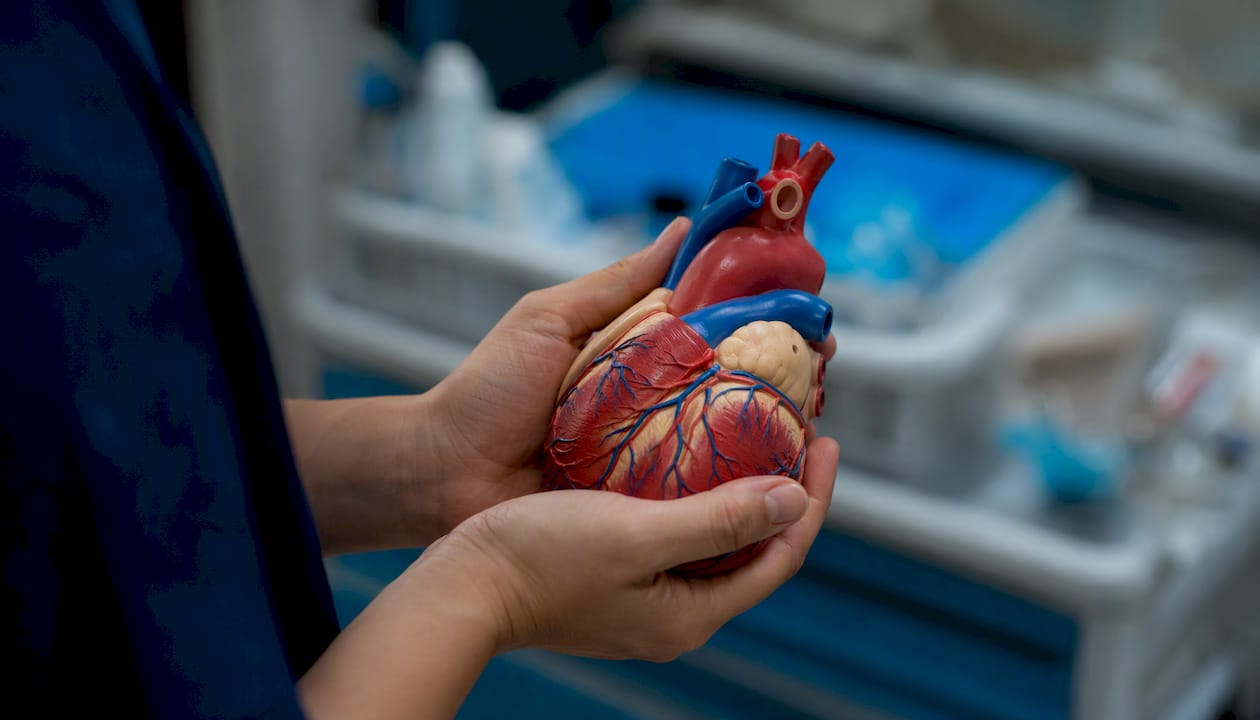
Most students hit a wall in pathophysiology because they try to memorize disease facts without anchoring them to normal physiology. Refreshing A&P before tackling disease mechanisms is one of the most consistently recommended strategies for avoiding this trap. When you understand what normal looks like, the "broken" version makes logical sense.
Stepwise mapping checklist:
- Baseline: What does this organ/system do normally? (e.g., the kidney regulates fluid balance and blood pressure via the RAAS)
- Insult: What disrupts normal function? (e.g., decreased renal perfusion from heart failure)
- Cellular response: How do cells/tissues respond to the insult? (e.g., juxtaglomerular cells release renin)
- Systemic effects: What does that cellular response trigger at the system level? (e.g., angiotensin II causes vasoconstriction; aldosterone causes sodium and water retention)
- Clinical manifestations: What does the patient look, feel, and test like? (e.g., hypertension, edema, elevated BNP)
Worked example: pulmonary embolism
Normal A&P: the pulmonary vasculature carries deoxygenated blood to the lungs for gas exchange. Insult: a clot lodges in a pulmonary artery, blocking blood flow. Cellular response: the affected lung segment receives no blood, so ventilation continues without perfusion (V/Q mismatch). Systemic effect: hypoxemia develops; the right ventricle works harder against increased pulmonary resistance. Clinical manifestations: sudden dyspnea, pleuritic chest pain, tachycardia, hypoxia, and elevated D-dimer.
A&P topics to refresh first, by system:
- Cardiovascular: cardiac cycle, preload/afterload, Frank-Starling law
- Respiratory: gas exchange, V/Q ratio, oxygen-hemoglobin dissociation curve
- Renal: GFR, RAAS, tubular reabsorption
- Endocrine: feedback loops, insulin/glucagon axis, HPA axis
- Neurological: action potentials, neurotransmitter function, blood-brain barrier
Which study resources are worth your time
Not all resources are equal, and using the wrong one for the wrong purpose wastes hours you don't have. The key is matching the resource type to the learning goal.
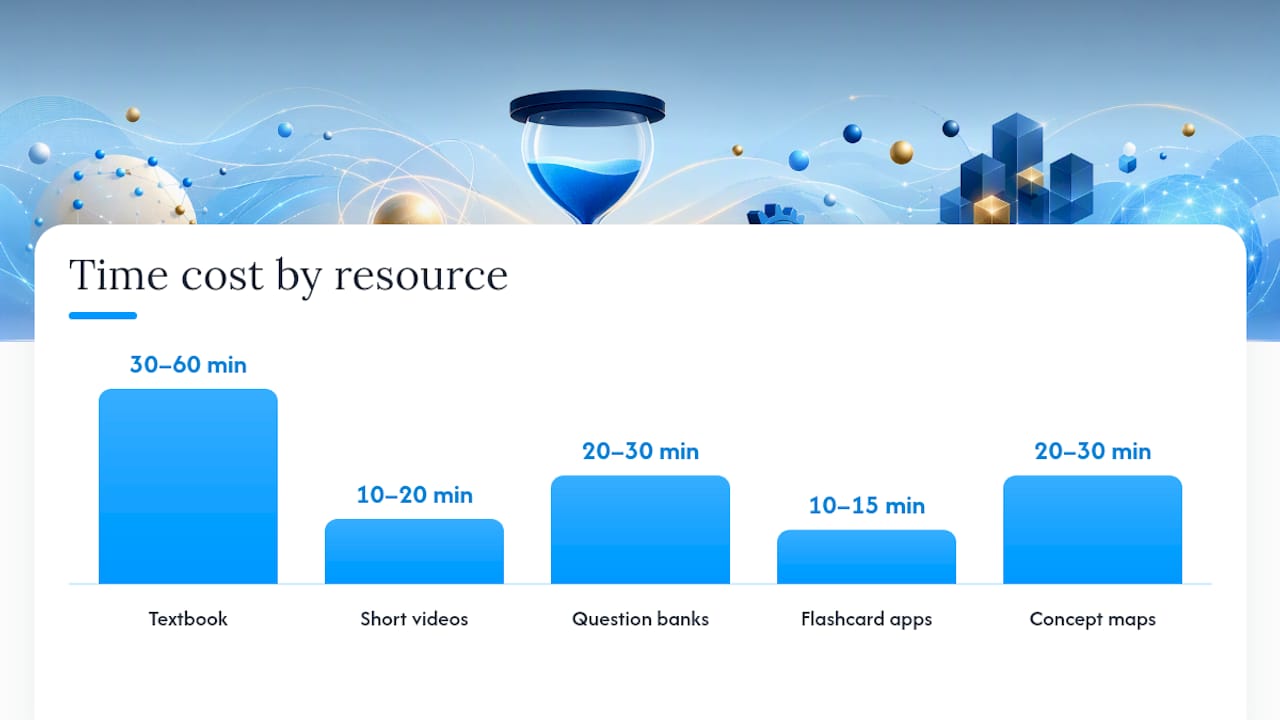
| Resource Type | Best For | When to Use | Time Cost |
|---|---|---|---|
| Textbook (e.g., Porth's Pathophysiology) | Deep mechanism understanding, etiology detail | First pass through a new system | High (30–60 min per disease) |
| Short educational videos | Visualizing dynamic processes (blood flow, cell signaling) | After reading, to reinforce mechanism | Low–Medium (10–20 min) |
| Question banks | Application, clinical reasoning, exam readiness | Daily, from Week 1 onward | Medium (20–30 min per session) |
| Flashcard apps with adaptive spacing | Spaced retrieval, weak-area targeting | Daily quick review, commute, between classes | Low (10–15 min) |
| Concept maps (self-made) | Integrating mechanisms, connecting A&P to disease | Weekly, after completing a system | Medium (20–30 min per map) |
Interactive tools and short video vignettes are high-yield supplements for pathophysiology because they show dynamic physiological interactions that static text can't capture. A diagram of pulmonary edema developing in real time sticks better than three paragraphs describing it.
Building your flashcard set:
- Tag every card by system (e.g., #cardiovascular) and by mechanism step (#etiology, #pathogenesis, #manifestation, #nursing)
- Keep cards atomic: one concept per card
- Add a "clinical pearl" field to each card (e.g., "In SIADH, urine osmolality is HIGH despite low serum sodium")
What to look for in a study app: adaptive spacing that adjusts to your weak areas, daily practice question sets, progress tracking by topic, and the ability to generate content from your own notes. Recallos is built around exactly these features, with high-yield questions aligned to NCLEX blueprints and personalized weak-area review developed by practicing nurses and CRNAs.
For broader exam prep strategies that complement pathophysiology work, the TEAS and HESI exam prep guide covers time-management and study-session structure that transfers directly.
How to use diagrams, flowcharts, and mnemonics effectively
Visual tools work because pathophysiology is fundamentally a sequence of events. A flowchart turns "inflammation causes vasodilation which causes increased permeability which causes edema" into a chain you can follow and reproduce. Flowcharts and concept maps improve clinical reasoning by converting passive reading into an active mapping process.
How to build a pathogenesis flowchart (Rule of Three):
- Etiology: What causes the disease? (one box)
- Cellular/tissue mechanism: What happens at the cellular level? (one to three boxes)
- Manifestation: What does the patient experience? (one box per major symptom cluster)
Connect the boxes with arrows. Add labs and nursing implications in a side column. The whole map should fit on one page.
Mnemonics for common pathophysiology patterns:
- MUDPILES for high anion gap metabolic acidosis (Methanol, Uremia, Diabetic ketoacidosis, Propylene glycol, Isoniazid/Iron, Lactic acidosis, Ethylene glycol, Salicylates)
- AEIOU TIPS for altered mental status causes (Alcohol, Epilepsy, Insulin, Opiates, Uremia; Trauma, Infection, Psychiatric, Stroke/Structural)
- LMNOP for acute pulmonary edema management (Lasix, Morphine, Nitrates, Oxygen, Position upright) — useful for connecting pathophysiology to nursing intervention
Reusable concept-map template:
- Center box: Disease name
- Left branch: Etiology and risk factors
- Top branch: Pathogenesis (cellular mechanism chain)
- Right branch: Clinical manifestations (symptoms, signs, labs)
- Bottom branch: Nursing implications and interventions
When a paragraph in your textbook feels dense, convert it to a flowchart immediately. The act of deciding which words go in boxes and which become arrows is itself a retrieval and synthesis exercise.
Note-taking that actually prepares you for exams
Good notes aren't a transcript of the lecture. They're a study artifact you can use for active recall, concept mapping, and question practice. The goal is to capture the mechanism, not the words.
Note template for every disease:
- Etiology: What causes it? (risk factors, triggers, underlying conditions)
- Pathogenesis: What is the step-by-step mechanism? (cellular → tissue → organ → system)
- Manifestations: What does the patient present with? (symptoms, signs, vitals)
- Labs and imaging: What do the numbers show? (ABGs, BMP, CBC, chest X-ray findings)
- Nursing implications: What does the nurse monitor, do, and teach?
- Clinical pearl: One sentence that captures the key concept (e.g., "In COPD exacerbation, hypoxic drive means high-flow O2 can suppress respiratory effort")
Turning lecture notes into active-review cards (30–60 minutes after class):
- Highlight every mechanism step in your notes
- Convert each step into a question-and-answer flashcard
- Flag any concept you can't explain in plain language. Those go on your "Feynman list" for the next study session.
Exam strategy checklist:
- Complete all practice questions for the tested systems (minimum 30 per system)
- Review error log and redo missed questions
- Rebuild concept maps from memory (no notes)
- Timed practice block: 30 questions in 45 minutes
- Teach one mechanism out loud the night before
Error log template:
- Question number and topic
- What you answered and why
- Correct answer and mechanism explanation
- Action: what to review before the exam
Structured error logs and targeted remediation convert missed questions into durable knowledge rather than repeated mistakes. Students who review rationales and log errors consistently outperform those who just retake questions.
Common mistakes that cost students exam points
Most pathophysiology struggles come down to a handful of repeatable errors. Knowing what they are makes them avoidable.
Cramming instead of spacing: Cramming loads information into short-term memory that evaporates within days. Spaced, frequent sessions beat infrequent marathon sessions for retention. The fix: 45–60 minutes daily beats a 6-hour Sunday session every time.
Rote memorization without mechanisms: Memorizing "heart failure causes edema" without understanding why (increased hydrostatic pressure from venous congestion) leaves you helpless on application-level questions. Learn the chain, not the endpoint.
Skipping A&P review: Pathophysiology is broken physiology. If you don't know what normal looks like, the disease mechanism is just a list of words. Spend 20–30 minutes refreshing normal function before studying any new disease.
Passive rereading: Reading your notes three times feels productive. It isn't. Retrieval practice, not exposure, builds durable memory. Close the book and write from memory instead.
Ignoring the clinical connection: Pathophysiology studied in isolation from nursing implications is harder to retain and harder to apply. Always ask: "What would I assess? What would I expect to see on labs? What would change if this got worse?"
Time management pitfalls:
- Don't let one difficult system consume all your time. Set a hard stop and move forward.
- Schedule pathophysiology study in your most alert hours, not as the last thing before bed.
- Use commute time for flashcard review, not new material.
Managing medical terminology: New terms stick faster when you break them into roots. "Cardiomyopathy" = cardio (heart) + myo (muscle) + pathy (disease). Build a running glossary of roots and affixes in your notes. When you encounter a new term, decode it before looking it up.
Why active recall and spaced repetition work: the evidence
The cognitive science behind these methods is consistent. Active recall forces the brain to reconstruct a memory trace rather than simply recognize it, which strengthens the neural pathway each time retrieval succeeds. Spaced repetition exploits the spacing effect, the well-documented finding that memory is more durable when review is distributed over time rather than massed.
For pathophysiology specifically, this matters because the NCLEX tests application, not recognition. You won't see "which of the following is a symptom of heart failure?" You'll see a patient scenario and be asked what the nurse should do next, which requires you to retrieve and apply the mechanism under time pressure.
Practical metrics to track:
- Daily streak: consistency predicts retention more than session length
- Weekly accuracy: track your correct percentage on practice questions by system
- Retention at 1 week: redo a set of questions 7 days after first answering them. A drop below 60% means your spacing intervals are too long.
- Concept-map completeness: can you fill in the map from memory without prompts?
Recallos tracks these metrics automatically, with adaptive spacing that adjusts based on your performance and a streak system that reinforces daily practice habits. The platform's questions are built to NCLEX blueprints by practicing nurses and CRNAs, which means the practice volume you build there maps directly to exam readiness. NCLEX exam statistics are publicly available and worth reviewing to understand what pass rates look like at the cohort level and set realistic benchmarks for your own preparation.
A note on interpreting study evidence: most learning-science findings come from controlled lab settings or small student cohorts. The direction of the evidence for active recall and spaced repetition is consistent and replicated, but individual results vary based on baseline knowledge, study consistency, and material complexity. Use the methods, track your own metrics, and adjust.
What actually separates students who pass from those who retake
The students who struggle most in pathophysiology aren't the ones who lack intelligence. They're the ones who study reactively: cramming before exams, rereading instead of retrieving, and treating pathophysiology as a list of facts rather than a system of logic.
The shift that changes outcomes is treating every study session as a retrieval event. Not "I will read about renal failure today" but "I will write everything I know about renal failure, find my gaps, and fill them." That reframe turns passive exposure into active construction, and active construction is what the NCLEX actually tests.
There's also a consistency argument that most students underestimate. Forty-five minutes of focused daily practice compounds faster than three hours on a Sunday. The spacing effect isn't a theory. It's the reason you still remember your childhood phone number but forgot last week's lecture. Build the daily habit first. The content follows.
One more thing worth saying plainly: concept maps are not busywork. Students who draw their own maps, from memory, without copying the textbook, consistently report that the act of building the map is where the real learning happens. The finished map is almost secondary.
Recallos puts these strategies into your daily routine
Every technique in this article requires consistency to work. That's where most students fall short, not because they don't know the methods, but because building and maintaining a daily retrieval practice from scratch is genuinely hard.
Recallos is built for exactly this. The platform delivers daily high-yield NCLEX-style questions, adapts to your weak areas automatically, and tracks your streaks and accuracy so you can see your progress in real numbers rather than guessing. Questions are developed by practicing nurses and CRNAs against actual exam blueprints, so the practice volume you build there is directly relevant to your exam.
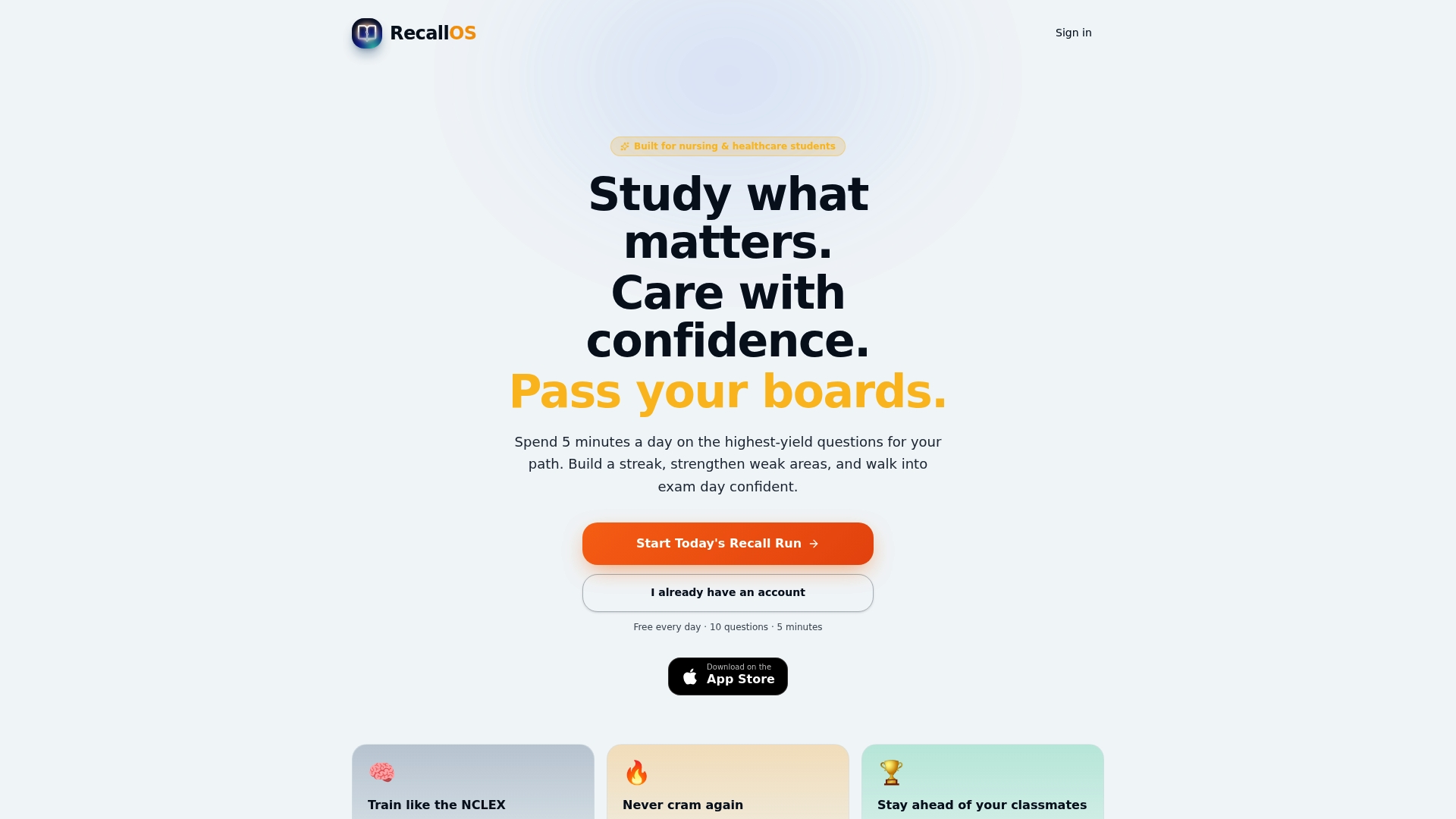
The workflow is straightforward: after class, upload your lecture notes to Recallos. The platform generates flashcards, quizzes, and summaries from your own material. Your daily review session pulls from those cards plus the platform's high-yield question bank, weighted toward your weakest areas. You get the spaced repetition scheduling, the adaptive difficulty, and the progress tracking without building it yourself.
Start with the free daily practice set at Recallos or browse the examples page to see how pathophysiology flashcard decks and daily sessions look in practice.
Sources
The sources below back the methods described in this article and are worth bookmarking for deeper study.
- Clrn
- Pathophysiology: The Definitive Guide for Healthcare Students in 2026 - PharmEDU
- Corelabs
- Pathophysiology Study Tips for Success