
The Pearson VUE trick can align with your real outcome within 24 to 48 hours, but it's a guess based on a registration glitch, not a result. NCSBN and Pearson VUE don't endorse it, don't measure its accuracy, and treat it as separate from the official scoring pipeline. Your safer early check is the Quick Results service where your state offers it. Everything else, including the pop-up itself, is a signal to interpret with caution, not a verdict to act on.
TL;DR:
- The Pearson VUE trick relies on registration system glitches that produce inconsistent signals about exam results, but it is not endorsed or validated by official bodies.
- Candidates should wait several hours to a day after testing before attempting the trick and stop before entering payment information to avoid unnecessary charges.
- Quick Results provides a more reliable early indicator about passing or failing, but it is only available in some jurisdictions and costs $7.95.
- The timing of registration system updates affects the trick's accuracy, with delays sometimes causing false positives for failure or false negatives for passing.
- Combining cautious interpretation of system pop-ups with official Quick Results and official results is the safest way to understand your NCLEX outcome.
Table of Contents
- What Is the Pearson VUE Trick and What Do the Pop-Ups Mean?
- How to Try the Trick Without Risking Your Card or Your Account
- How Accurate Is the Pearson VUE Trick in 2026?
- Why the Trick Behaves This Way: Scoring, CAT, and Result Processing
- Quick Results: The Faster Official Early Check
- What to Do After You See a Pop-Up
- Use the Waiting Window Instead of Just Surviving It
- Why the Pearson VUE Trick Refuses to Die
- A Study Plan That Works Whether You Passed or Not
- Sources
- FAQ
What Is the Pearson VUE Trick and What Do the Pop-Ups Mean?
The Pearson VUE trick is simple in mechanics and shaky in logic. After finishing the NCLEX, you log back into your Pearson VUE account and start a new registration for the same exam, as if you were scheduling it for the first time. What happens next gets read as a fortune teller's message.
If the system blocks you from re-registering, it's sometimes interpreted as a sign your results have been recorded, which many believe suggests a pass, though this is not official. If the registration screen lets you proceed to payment for a new exam attempt, it may indicate ongoing eligibility to test again, which some take as a hint of failure, but this is not an official result.
Neither Pearson VUE nor the 2026 NCLEX Examination Candidate Bulletin from NCSBN mentions this trick, references it, or treats registration status as a stand in for a result. Official results come from your nursing regulatory body, not from what a scheduling portal happens to display.
Wording and timing vary more than most candidates expect:
- Some report the "good" message appearing within an hour of finishing testing, others say it took most of a day.
- The exact phrasing changes by state board and by how Pearson VUE's system is configured for that jurisdiction.
- A handful of candidates get an ambiguous message that doesn't clearly match either category, which tends to cause the most anxiety of all.
- Retake candidates sometimes see different messaging than first-time candidates, because their registration history in the system looks different.
That inconsistency alone should tell you something: this is a byproduct of how a scheduling database updates, not a purpose-built feedback tool.
How to Try the Trick Without Risking Your Card or Your Account
If you're going to attempt this, do it in a way that doesn't cost you money or create a scheduling mess. Here's the sequence that keeps you safe.
- Wait several hours after your exam before attempting the trick, ideally until the next business day, since registration status updates take time to reflect changes.
- Log into your Pearson VUE account using the same credentials you used to schedule your original exam.
- Start a new registration for the same exam type (NCLEX-RN or NCLEX-PN), entering your information as if you were a first-time candidate booking a new date.
- Watch what happens at the eligibility check, before you reach any page asking for payment. This is where you'll see either a block message or a screen inviting you to pick a testing date and pay.
- Stop before entering any card information. Whatever the screen shows you, close the browser tab once you've seen the result. You have no reason to proceed further.
- Sign out and avoid repeating the attempt multiple times in a short window. Repeated registration attempts can look like unusual activity to Pearson VUE's system, and there's no upside to trying five times in one afternoon.
Pro Tip: Use a debit or credit card with real-time transaction alerts turned on if you're worried about accidental charges. If a payment screen appears and you're unsure whether tapping "continue" triggered anything, a card alert tells you within seconds instead of leaving you checking your bank statement three days later.
Do not call Pearson VUE, NCSBN, or your board of nursing asking someone to confirm what the pop-up means. Support staff at these organizations don't have early access to your score, and asking will not get you an answer faster. It just adds a frustrating phone call to an already stressful day. And skip any third-party voucher or registration reseller site that promises to "check" your status for you. Sites like GetVoucher exist in the broader exam-voucher ecosystem, but no outside registration platform has a backdoor into NCSBN's result pipeline. If a site claims otherwise, that claim itself is the reason to stay away.
How Accurate Is the Pearson VUE Trick in 2026?
There's no official accuracy rate for the Pearson VUE trick, and there never will be, because NCSBN doesn't track or validate it as a testing method. What exists instead is a large pile of anecdotal reports across forums and explainer sites from 2024 through 2026, describing cases where the pop-up matched Quick Results and cases where it didn't. Reports suggest the trick tends to line up more often with actual outcomes inside the 24 to 48 business hour window after testing, once registration systems have had time to reflect eligibility changes.
That timing detail matters more than most candidates realize. Immediately after your exam, before your record has finished transmitting anywhere, the registration system is often just displaying stale information from before you tested. Try the trick within the first hour and you might see whatever status you had walking in, which explains a chunk of the false readings people report.
Here's where things break down in both directions:
- False positives happen when a system glitch, an unrelated eligibility hold, or a delay in processing produces a "blocked" message for someone who actually failed.
- False negatives happen when a candidate who passed still gets the payment screen, often because their specific state board hasn't updated its data feed yet, or because the registration system defaults to allowing new bookings until it explicitly receives a stop signal.
- Jurisdictions handle registration data differently, so a method that seems to "work" for someone in one state can behave completely differently for a candidate testing under a different board.
- Candidates who test near system maintenance windows or during high-volume testing periods report more inconsistent results.
None of this means the trick is worthless as a piece of anecdotal information. It means you should treat a good pop-up as mildly reassuring at best, and a bad pop-up as a prompt to check Quick Results rather than a confirmed failure. Community accuracy discussions are not the same as a validated testing method, and no explainer site tracking these reports has the same authority as NCSBN's own documentation.
Why the Trick Behaves This Way: Scoring, CAT, and Result Processing
The reason the Pearson VUE trick is inconsistent comes down to how the NCLEX actually gets scored and released. Your exam gets scored twice, once at the testing center immediately after you finish, and again after your full record transmits to NCSBN and then to your nursing regulatory body. Only after that second pass does your NRB receive anything it can officially release. Pearson VUE's registration system doesn't drive that process. It just reflects whatever eligibility flag has been set for your account at a given moment, which can lag behind the actual scoring timeline by hours or occasionally longer.
The 2026 NCLEX-RN Test Plan also explains why guessing based on how your exam felt, or how many questions you got, is its own kind of unreliable trick. The NCLEX remains a computerized adaptive test with a minimum of 85 items and a maximum of 150, running up to five hours, and it uses multiple stopping rules rather than a single fixed cutoff.
| Exam factor | What it actually determines | What it does NOT tell you |
|---|---|---|
| Minimum item count (85) | The test reached a confidence stopping point at the minimum | Whether that confidence point was pass or fail |
| Maximum item count (150) | The test ran out of items before reaching full confidence | Whether the final estimate landed above or below the passing standard |
| Five-hour time limit | A hard testing window boundary | Your ability level relative to the standard |
| Registration eligibility flag | Whether your record has been marked complete in Pearson VUE's system | Your actual score or pass/fail outcome |
A short exam doesn't mean you failed, and a long exam doesn't mean you passed, despite how often that logic circulates among anxious candidates. Our breakdown of the 2026 NCLEX test plan goes deeper into how CAT scoring actually works, which is worth reading if item-count anxiety is part of what's driving you toward the registration trick in the first place.
Quick Results: The Faster Official Early Check
If you want a real early signal instead of a guess, Quick Results is the option NCSBN itself documents and supports. It's an unofficial early results service, but it's built and sanctioned specifically for this purpose, unlike a registration loophole nobody designed on purpose.
Here's what you need to know about how it works:
- Quick Results typically become available about 48 business hours after your exam appointment, though the exact timing depends on your state board.
- The service costs $7.95, a small fee compared to what a retake would cost you if you acted on a false signal and delayed your real study plan.
- Availability varies by jurisdiction. Not every U.S. state offers Quick Results, and it isn't available for candidates testing for licensure in Canada or Australia.
- You check Quick Results directly through the Pearson VUE candidate portal, using the same login you used to schedule your exam, rather than through any third-party site.
- Official NCLEX results are issued solely by your nursing regulatory body and can take several weeks depending on their processing timeline.
Quick Results won't help every candidate, since state availability is inconsistent, but where it's offered, it beats a registration guess on every axis that matters: it's sanctioned, it's fast, and it's not subject to the same lag and glitch issues that make the Pearson VUE trick unreliable.
What to Do After You See a Pop-Up
Your next move depends on which pop-up you saw, but the underlying advice is the same in both cases: don't treat either message as final.
- If you got the good pop-up, resist the urge to celebrate publicly or make firm plans around a pass. Check Quick Results if your state offers it, and treat the registration block as one data point among several, not a confirmed outcome.
- If you got the bad pop-up, don't panic and don't immediately buy a retake voucher. Check Quick Results first if it's available for your board, since a payment screen can appear even for candidates who passed, especially soon after testing.
- If Quick Results confirms a fail, or if it's simply unavailable in your state and you're planning for a possible retake, check your Authorization to Test status and NRB-specific eligibility rules before assuming you can schedule immediately.
- Start light review now, even before you know for certain. A short, focused study block in weak areas costs you nothing if you passed, and gives you a head start if you didn't.
Pro Tip: Don't let a bad pop-up push you into buying a retake exam voucher the same day. Wait for either Quick Results or your official NRB notification. Acting on an unofficial signal and then getting a different official result creates unnecessary financial and emotional whiplash.
If a retake does end up on your calendar, our retake plan mapped to weak areas walks through how to prioritize study time against the actual NCSBN blueprint instead of guessing at what to review.
Use the Waiting Window Instead of Just Surviving It
The 24 to 48 hours after your NCLEX are objectively strange. You're not preparing for anything specific yet, but sitting completely still isn't productive either. The better move is short, targeted review sessions instead of either extreme.

Adaptive study in this window pays off more than broad rereading, because you're not cramming for a specific date anymore. You're reinforcing whatever content areas felt shakiest during the actual exam, while those experiences are still fresh in memory. A focused ten or fifteen minute session on a weak topic area beats an unfocused hour of flipping through old notes.
This is where a tool built around daily, adaptive practice earns its keep, regardless of which pop-up you saw:
- A Daily Recall Run style routine keeps you engaged with high-yield content without requiring a full study plan you don't have energy for right now.
- Personalized review of weak areas means your practice time goes toward the topics that actually need reinforcement, not random review.
- Uploading your own notes into a system that turns them into quizzes and flashcards gives you material specific to what you actually studied, rather than generic practice questions.
- Streak and progress tracking gives you something concrete to focus on besides refreshing your email for results.
Whether you end up celebrating a pass or gearing up for a retake, the habit of daily focused practice doesn't go to waste. Our guide to NCLEX exam predictions for 2026 breaks down which content areas deserve priority attention if you're using this window to sharpen weak spots.
Why the Pearson VUE Trick Refuses to Die
Every NCLEX cycle, a new wave of candidates discovers the Pearson VUE trick, and every cycle, nursing forums fill up with screenshots and conflicting stories about what the pop-ups supposedly mean. That persistence isn't really about the method's accuracy. It's about what waiting does to people.
Finishing the NCLEX and then facing up to six weeks of silence is a specific kind of unbearable. The trick gives candidates something to do with that anxiety: a ritual, a story to share, a community of people going through the identical uncertainty at the identical hour. Forums amplify whichever anecdotes confirm the pattern people want to believe, while the failures and false readings get less attention. That's not dishonesty. It's just how anecdote-driven communities work.
My honest take is that the trick isn't dangerous when used carefully, but it's also not information. Treat it the way you'd treat a fortune cookie that happens to be right sometimes. Check Quick Results, watch for your official NRB notification, and don't let a registration screen decide how your next 24 hours feel.
— Caleb
A Study Plan That Works Whether You Passed or Not
There are other ways to spend the waiting period, from obsessively refreshing forums to trying every version of the registration trick you can find. Neither actually moves you forward. There are study tools that offer productive ways to spend that time, providing value regardless of your result.
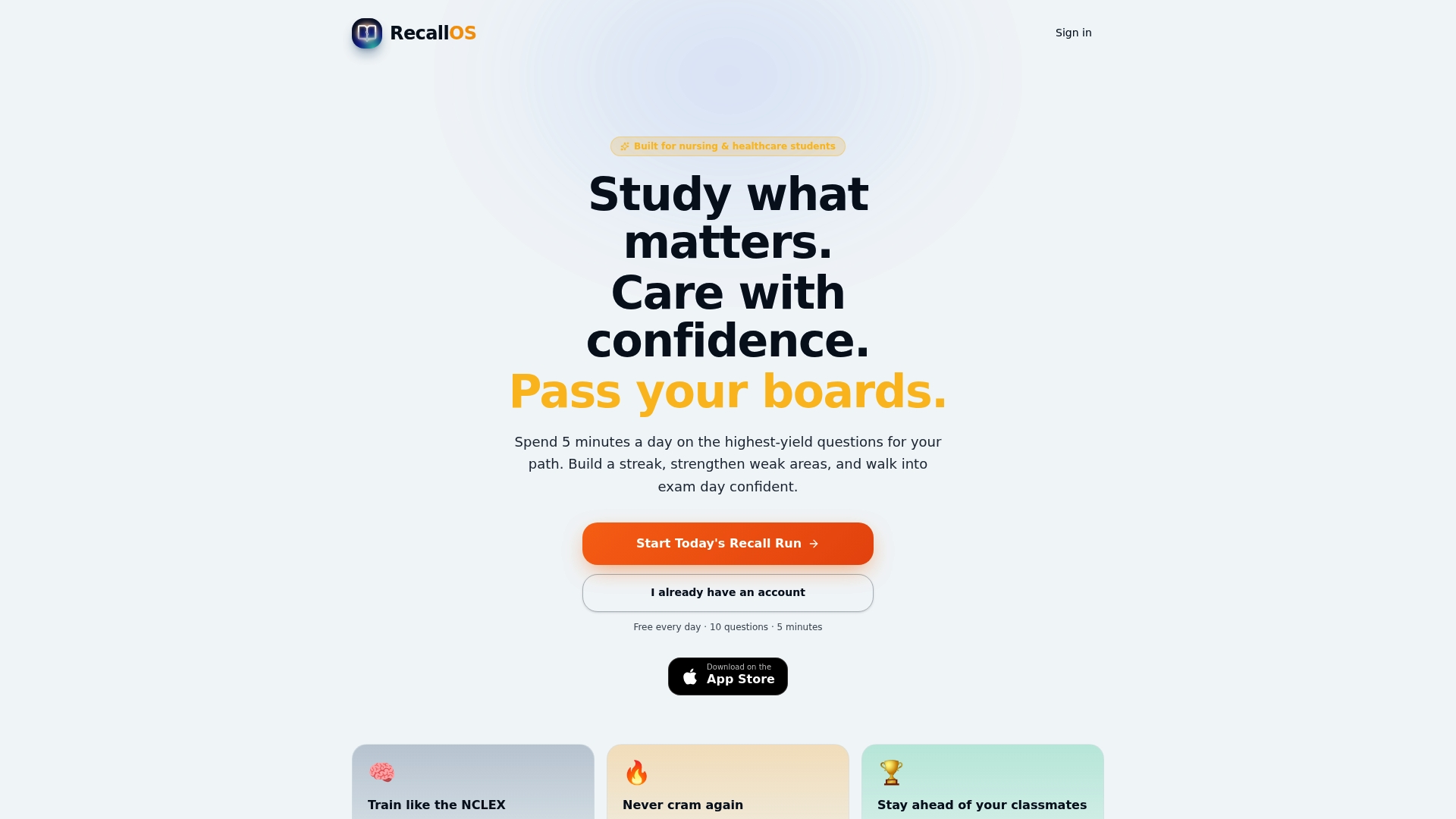
A study app can deliver short, high-yield practice sessions derived from exam blueprints, so a brief study block during your waiting period can reinforce important content areas. Some study tools offer the ability to upload your own notes and convert them into personalized flashcards and quizzes that adapt to highlight weak areas revealed during practice sessions. Certain study apps are designed to provide focused, adaptive review rather than generic trivia. Whether you're waiting on Quick Results or already mapping out a retake plan, start a Daily Recall Run today, or explore Recall+ and Recall Pro to see which plan fits your timeline.
FAQ
Is there a free retake voucher available for Pearson VUE exams in 2026?
In 2026, there is no universal free retake voucher program through Pearson VUE or NCSBN; retake costs and assistance vary by individual state boards.
Is the NCLEX getting harder in 2026?
The 2026 test-plan changes were minor edits made for clarity and currency, with category weighting staying similar to previous plans. Claims that the exam got harder in 2026 specifically aren't supported by NCSBN's own test-plan documentation.
What is the Pearson VUE trick to see if you passed?
It's an unofficial method where you try to re-register for the NCLEX right after finishing your exam. A blocked registration is read as a possible pass, while being allowed through to a payment screen is read as a possible fail, though neither outcome is an official result.
How soon can I try the Pearson VUE trick?
Most reports suggest waiting several hours to a full day after testing, since registration systems need time to reflect any eligibility updates. Trying immediately after leaving the testing center often shows outdated status information rather than a meaningful signal.